
AI-Generated Unemployment
If your job has a name, it may be at risk.

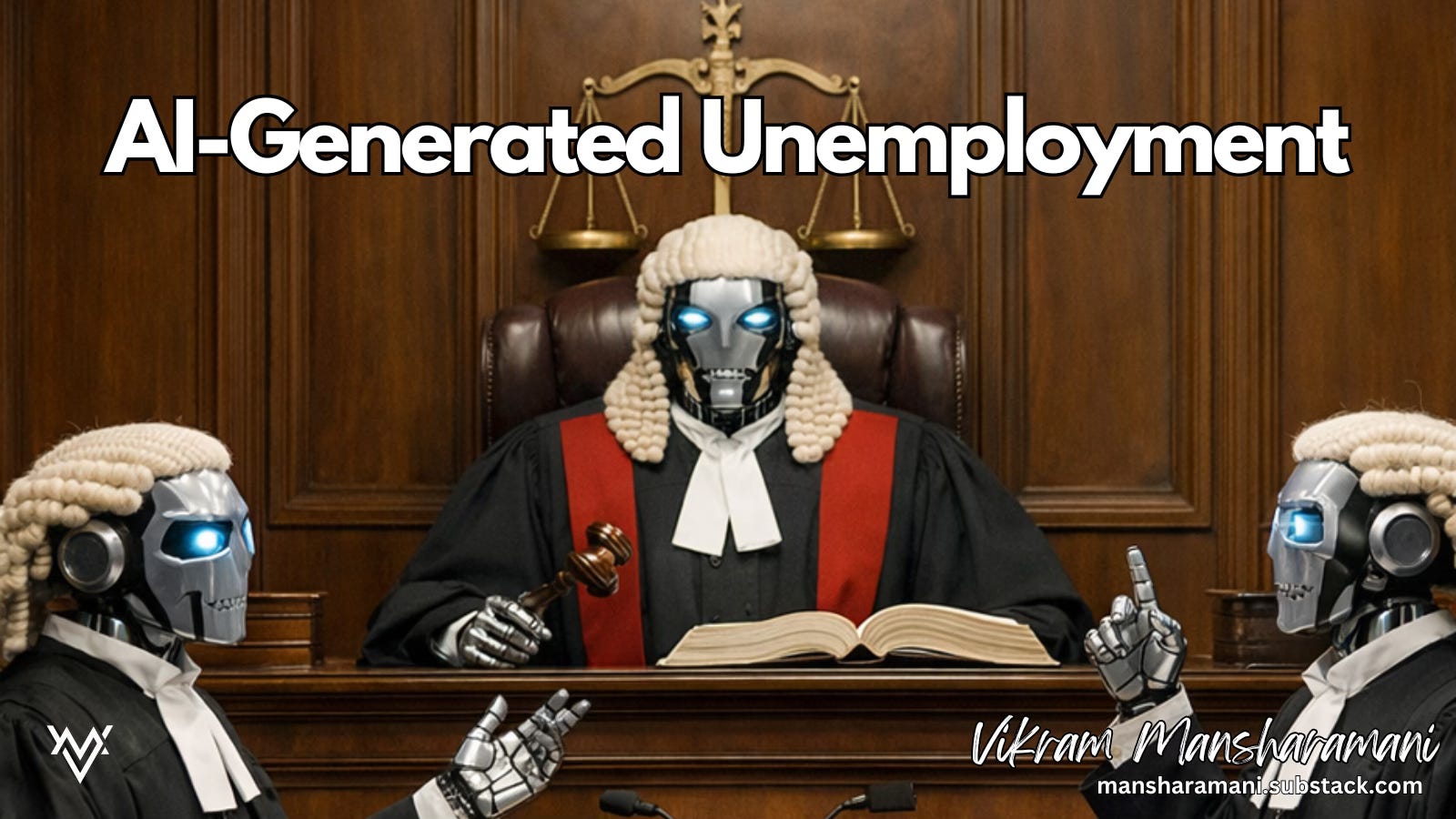
There has been a lot written lately about AI’s impact on the economy, specifically how many jobs it will eliminate. And that’s really only one of the many risks that will accompany the massive advancements in information processing capabilities that AI is empowering.
AI-Generated Worries

Developments in artificial intelligence are accelerating at an ungodly rate, and, as AI entrepreneur Matt Shumer eloquently summarized in a recent post with an understated title, “Something big is happening…” Matt does a fabulous job of pulling together the dynamics of what’s transpiring in the world of AI…and it integrates many of the thoughts I’ve had over the p…
But there has also been a lot of discussion about the productivity boom AI will unleash, enabling massive breakthroughs in medicine and other research-driven fields. Scientists and many others have found the new found analytical capabilities very promising.
AI's Brave New World

Last week I wrote about why AI keeps me up at night. This week, I want to explain why it also gets me out of bed in the morning. I’ve always felt that successfully navigating uncertainty requires consideration of multiple perspectives and since last week was about worries, it’s now time to explore the upside of AI.
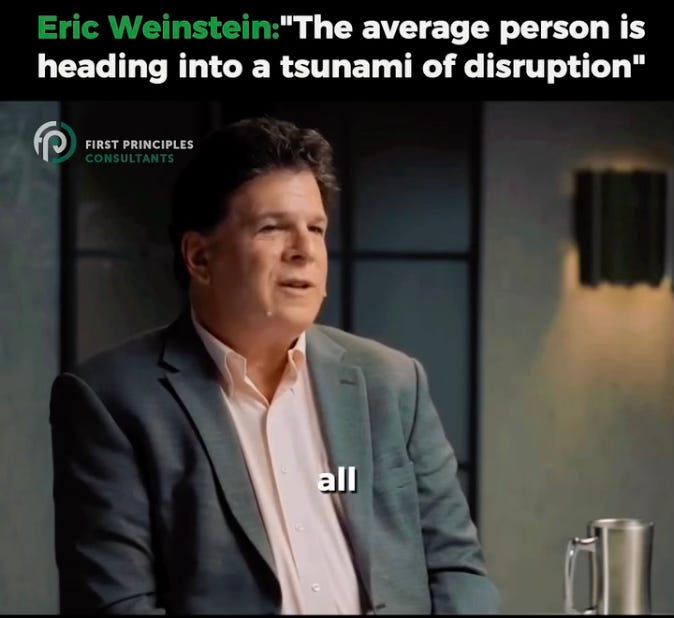
Today, I plan to dig deeper into the jobs-related impact of AI. And one of the most interesting ways to describe this dynamic comes from a person who I’ve had the pleasure of spending some time with at a crypto-related conference in 2019 – Eric Weinstein. Eric is a truly independent thinker and a fellow generalist…and recently summarized the job risk quite succinctly: if your job has a name, AI will take it.
His argument is straightforward and compelling. If your job has a formal description, it is essentially a defined script with a repeating pattern and AI can and will learn to do it better than you. Accountant, teacher, analyst, programmer, dentist, radiologist…are examples he gives of jobs that will soon be extinct.
I suspect lawyers should probably also be on that list. Entrepreneur Matt Shumer recently wrote about a conversation he had with a lawyer friend of his about the impact AI would have on the legal profession. He describes it as akin to having an entire team of associates at his disposal that can quickly turnaround quality work. And AI has been improving in leaps and bounds and at such a rate that he anticipates it won’t be long before it can even replace him, a partner with decades of experience.
In the short-run, however, I believe judgment and experience will still matter in the legal profession—especially in litigation and some of the non-routine functions in the industry—at least until we have AI or AI-powered judges. But the point is a valid one. For the blocking and tackling of most legal functions, including tasks completed by most in-house lawyers, an AI might prove more efficient, more comprehensive, and less expensive.
I launched a private label frozen pizza company in 2024 and have been stunned by the amount of legal work that our organization generates on a day-to-day basis. HR documents, contracts, vendor agreements, disclosures, regulatory disclosures, offer letters, termination proceedings, internal policies, and insurance policies all require some level of legal review, even if only by business folks like me who have limited legal training. And in the case of a startup, we may even need help generating initial form documents for many routine tasks – like creating a standard confidentiality agreement. All of these reviews, in the absence of in-house counsel, quickly add up to a large number of billable hours. For a small business like mine, these expenses can be a significant hit to the bottom line and may be the difference between a business that’s in the black and one that’s in the red.
Ready, Fire, Aim!

I recently started a frozen pizza manufacturer in New Hampshire. When I launched the company by purchasing the distressed assets of a company that had recently failed, the new business had to go from “zero to sixty” in a matter of days. Literally overnight, I went from owning a bunch of equipment to hiring dozens of employees and churning out tens of t…
I had heard that Claude, Anthropic’s AI engine, was particularly powerful in handling several “white collar” functions such as basic accounting, financial analysis, and…drumroll please… legal work. So I decided to experiment with it. I’ve found that it’s latest model—Opus 4.6—is indeed an enormous leap forward. I’ve used it to build financial models, conduct competitive analysis, understand supply chain risks, and yes, conduct basic legal work.
At first I didn’t trust the outputs, so I had lawyers review Claude’s thinking. While I found Claude’s feedback helpful, I had no idea whether it was legally useful. I turned to friends who are lawyers and without telling them who provided the comments or drafts, asked for feedback. Every single lawyer friend I asked noted the ideas were exactly what they would have said. Now to be fair, I’ve been using Claude to help on some basic documents, like insurance and vendor documents. And in each of those cases, Claude allowed me to conduct a legal review where one might not otherwise have been run. We’ve also used it to generate HR documents and policies, all with my (literally) in-house counsel (i.e. my wife who is a graduate of Harvard Law) reviewing them before we put them to use.
So far, the benefit has been in time (Claude is very fast) and money (I don’t need to pay for drafting documents, only for their review). But I have to agree with both Weinstein and Shumer that it’s only a matter of time before I will develop the confidence to use AI instead of a lawyer for reviewing and drafting legal documents. And as the AI advances, I might let it do more and more of the legal work, including work that may be based on judgment or probabilities.
The macro implication is clear: the legal profession is on the verge of massive disruption and, in some segments of the industry, possible elimination. It would be imprudent, based on what I know, to recommend any young adult pursue a career as a lawyer. The headwinds for young adults entering the profession are going to be quite strong.
All Hail the Generalist

We have become a society of specialists. Business thinkers point to “domain expertise” as an enduring source of advantage in today’s competitive environment. The logic is straightforward: learn more about your function, acquire “expert” status, and you’ll go further in your career.
If AI can replace jobs that require the amount of training and expertise and experience that the legal profession demands, then surely no job is safe. Weinstein likens the impact to that of a tsunami and is warning people to batten down the hatches. What can one do to prepare? His advice is to learn to do a lot of different things, rather than specialize. And to learn to think and be creative rather than fallback on rote memorization and expertise.
Which of course, appeals very much to the generalist in me.
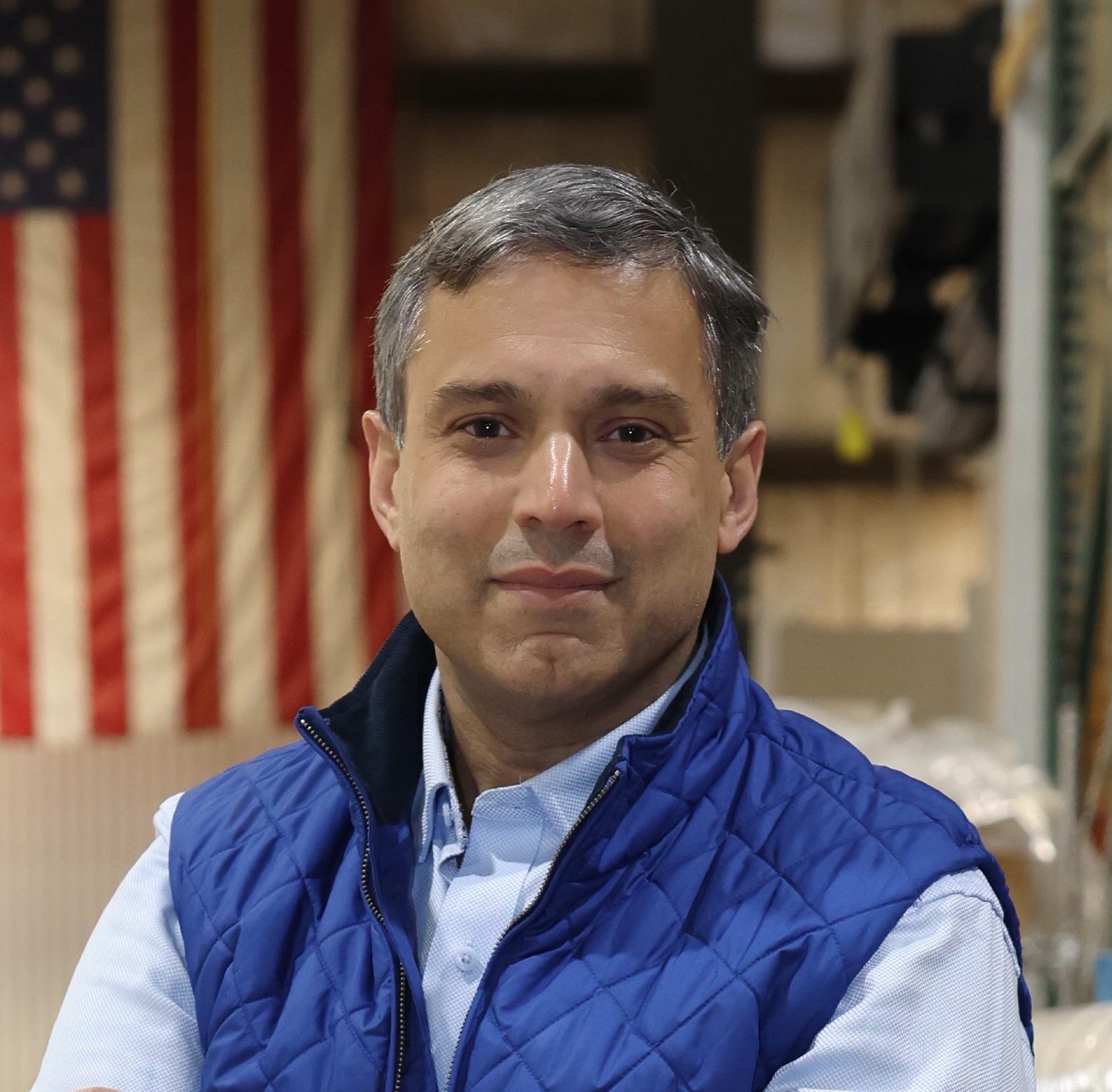
VIKRAM MANSHARAMANI is an entrepreneur, consultant, scholar, neighbor, husband, father, volunteer, and professional generalist who thinks in multiple-dimensions and looks beyond the short-term. Self-taught to think around corners and connect original dots, he spends his time speaking with global leaders in business, government, academia, and journalism. He’s currently the Chairman and CEO of Goodwell Foods, a manufacturer of private label frozen pizza. LinkedIn has twice listed him as its #1 Top Voice in Money & Finance, and Worthprofiled him as one of the 100 Most Powerful People in Global Finance. Vikram earned a PhD From MIT, has taught at Yale and Harvard, and is the author of three books, The Making of a Generalist: An Independent Thinker Finds Unconventional Success in an Uncertain World, Think for Yourself: Restoring Common Sense in an Age of Experts and Artificial Intelligence and Boombustology: Spotting Financial Bubbles Before They Burst. Vikram lives in Lincoln, New Hampshire with his wife and two children, where they can usually be found hiking or skiing.