
Lessons From The Pitch
How the World Cup Explains America and the World.

The World Cup final is later today (Argentina and the legendary Messi versus Spain and Lamine Yamal) at MetLife Stadium in New Jersey—and I’ll be watching. My son is an avid soccer fan and watching the games together has been one of those family moments you don’t plan but never forget. Sitting on the couch, cheering for the home team (or the favorite…or the underdog…), groaning at bad calls, high-fiving after goals, with the most important people in my world. And of course, how could we not fall in love with the Norwegian viking row?
As I watched the games this year, I was reminded of Franklin Foer’s book How Soccer Explains the World, which came out in 2004 and used soccer as a lens to explain tribalism, nationalism, corruption, and the enduring power of identity. It was a contrarian book during an era when Thomas Friedman’s The World Is Flat (2005) was on everyone’s mind, when globalization was supposed to sand down every rough edge and turn the world into one big market. Who could forget his famous thesis that no two countries that had a McDonald’s had ever gone to war with each other?
Foer pushed back. His argument was that the Beautiful Game revealed something uglier underneath. Foer suggested that tribalism doesn’t dissolve with free trade but rather deepens. Familiarity breeds contempt, as the old saying goes.
It was easy to see Foer’s thesis play out over the past few weeks. Before the tournament even started, there were boycott calls from European politicians furious over Trump’s immigration crackdowns, his threats against Greenland, and the invasion of Venezuela. Fans from 39 countries faced travel bans. A Somali referee who had been selected by FIFA to officiate was refused entry to the United States entirely. Then came the matches themselves: England versus Argentina in the semifinals—replaying the Falklands War on a pitch in Atlanta, 44 years later, with Argentine fans carrying Malvinas flags into the stadium. And now the final: Spain versus Argentina, which the internet has already dubbed “colonizer versus colonized.” Tribalism sure seems alive and well.
And then there’s the fact that America doesn’t care about soccer nearly as much as other countries. The United States is devoted to football—uniquely American, not really played anywhere else—which is itself an extension of an innate and enduring isolationism, born out of being surrounded by two oceans and friendly countries. We play our own game, on our own terms, declare ourselves the world champion, and the rest of the world can watch or not. Pundits warned of empty stadiums, dampened turnout, an American public too indifferent and too polarized to care.
And then the games started. And none of that happened.
Attendance shattered the all-time record by June 25…with 48 matches still to play. Fifty million Americans watched the US lose to Belgium 4-1, and then kept watching anyway, with viewership up 92% over 2022. The boycotts fizzled. And the internet flooded with videos of foreign tourists marveling over our country over Buc-ee’s (“A gas station mixed with Disney World wrapped in a gift shop”), over free refills, and bottomless appetizers (“The supply chains of this nation are beyond anything my ancestors imagined”) over Texas steaks. The world marveled at the sheer size of everything. And ranch dressing. Europeans became so enamored with the dressing that the TSA had to issue a warning to stop European tourists from packing bottles of ranch dressing in their carry-ons. Kraft launched a TSA-compliant ranch travel kit. I am not making this up.
As an American posted on X: “If you want to hate America, watch the news. If you want to love America, drive across it.”
And then there were the moments that made you forget about jerseys and borders entirely. Entire stadiums singing John Denver’s “Country Roads” after every US match…players and fans together, 70,000 voices, arms around strangers. Japanese fans staying behind to clean the stadiums after every game, win or lose. A Spain fan and a Cabo Verde fan swapping jerseys in the stands with the Cabo Verdean so moved that someone wanted to wear his tiny country’s shirt that both men were in tears. Japanese tourists in cowboy hats in Houston. A Mexican fan handing a young English boy his Merlin the Duck plush after their teams had just played each other.
Sure, Argentina and England still hold their grudge and Argentina and Spain will relitigate 300 years of colonial history on Sunday. Fans still sing songs about old wars and the tribalism that Foer wrote about hasn’t really disappeared. But it’s settled in shootouts, not shooting. The grudges are real, the passions are fierce, and at the final whistle, they swap jerseys, embrace the thrill of victory and agony of defeat as competitors who love the sport, and go home.
So maybe soccer really does explain the world. America is easy to hate from afar but harder to hate up close. Soccer is capable of making boycotts fizzle and getting people to overlook policy disagreements long enough to share a stadium. And all of this happened here. America hosting, bringing people together, welcoming the world with open hearts, inspiring them with the country we’ve built. Still the shining city on a hill and a force for good in the world.
America at 250: Still Shining

Inspired by my attendance at a naturalization ceremony in Portsmouth, New Hampshire, two years ago, I have been writing about America each year around Independence Day. Spending the day of America’s birth with her newest citizens, it was impossible for me not to think about my own family’s immigrant journey, and each year I pause and reflect with gratit…
It may not be our national sport, but we still cheer for the home team regardless of political persuasion. Despite divisions and polarization, in the end, we are still a patriotic people. Fifty million people (Yes, 50,000,000) watched a 4-1 loss, after all. Sure, we’re all tribal. But today’s tribes are capable of playing a sport fiercely and with passion, but also with joy and hugs, and singing songs after, regardless of jersey color.
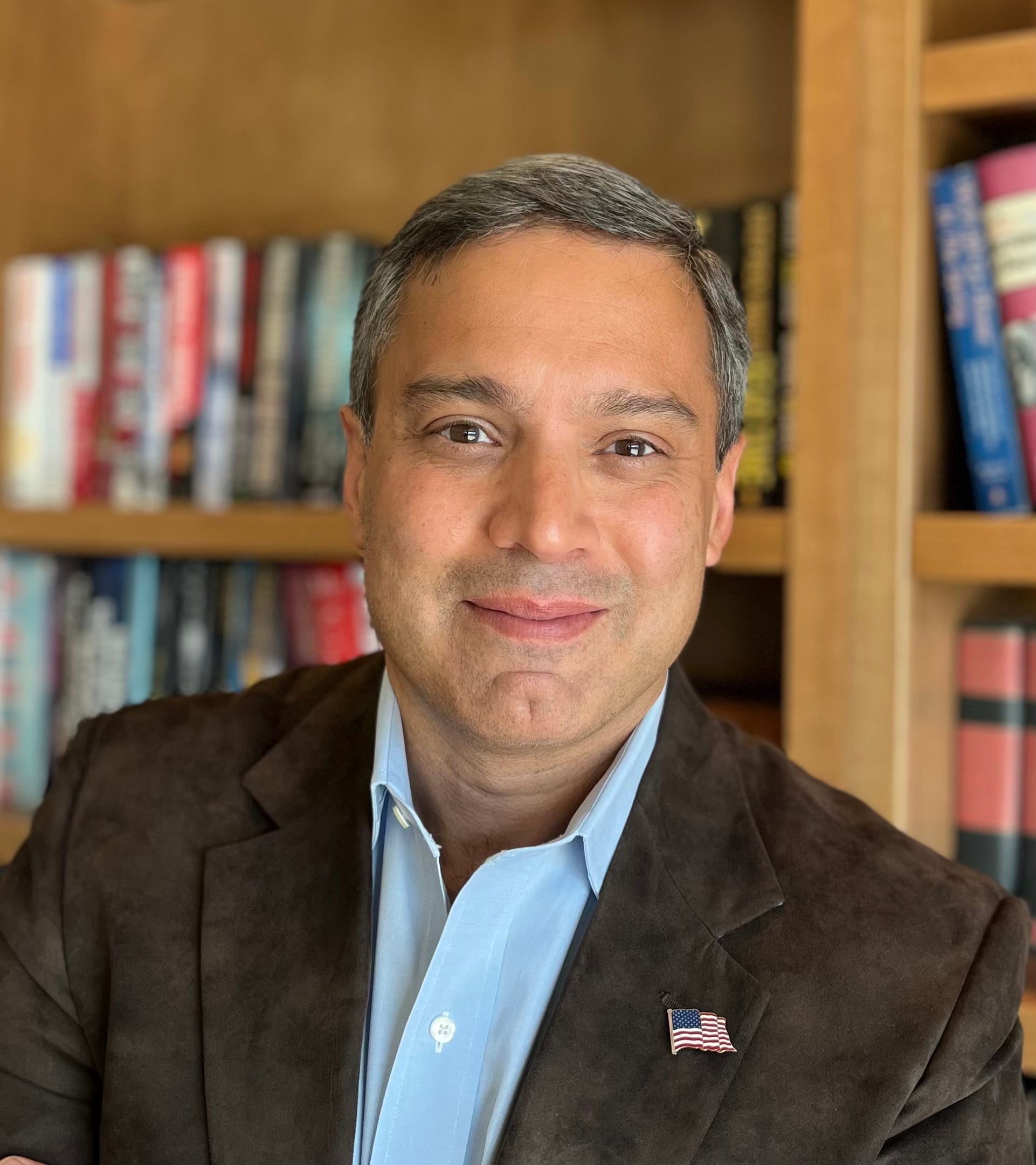
VIKRAM MANSHARAMANI is an entrepreneur, consultant, scholar, neighbor, husband, father, volunteer, and professional generalist who thinks in multiple-dimensions and looks beyond the short-term. Self-taught to think around corners and connect original dots, he spends his time speaking with global leaders in business, government, academia, and journalism. He’s currently the Chairman and CEO of Goodwell Foods, a manufacturer of private label frozen pizza. LinkedIn has twice listed him as its #1 Top Voice in Money & Finance, and Worthprofiled him as one of the 100 Most Powerful People in Global Finance. Vikram earned a PhD From MIT, has taught at Yale and Harvard, and is the author of three books, The Making of a Generalist: An Independent Thinker Finds Unconventional Success in an Uncertain World, Think for Yourself: Restoring Common Sense in an Age of Experts and Artificial Intelligence and Boombustology: Spotting Financial Bubbles Before They Burst. Vikram lives in Lincoln, New Hampshire with his wife and two children, where they can usually be found hiking or skiing.