
The "F" Word
Although protein reigns supreme today, fiber is likely to be the next big thing.

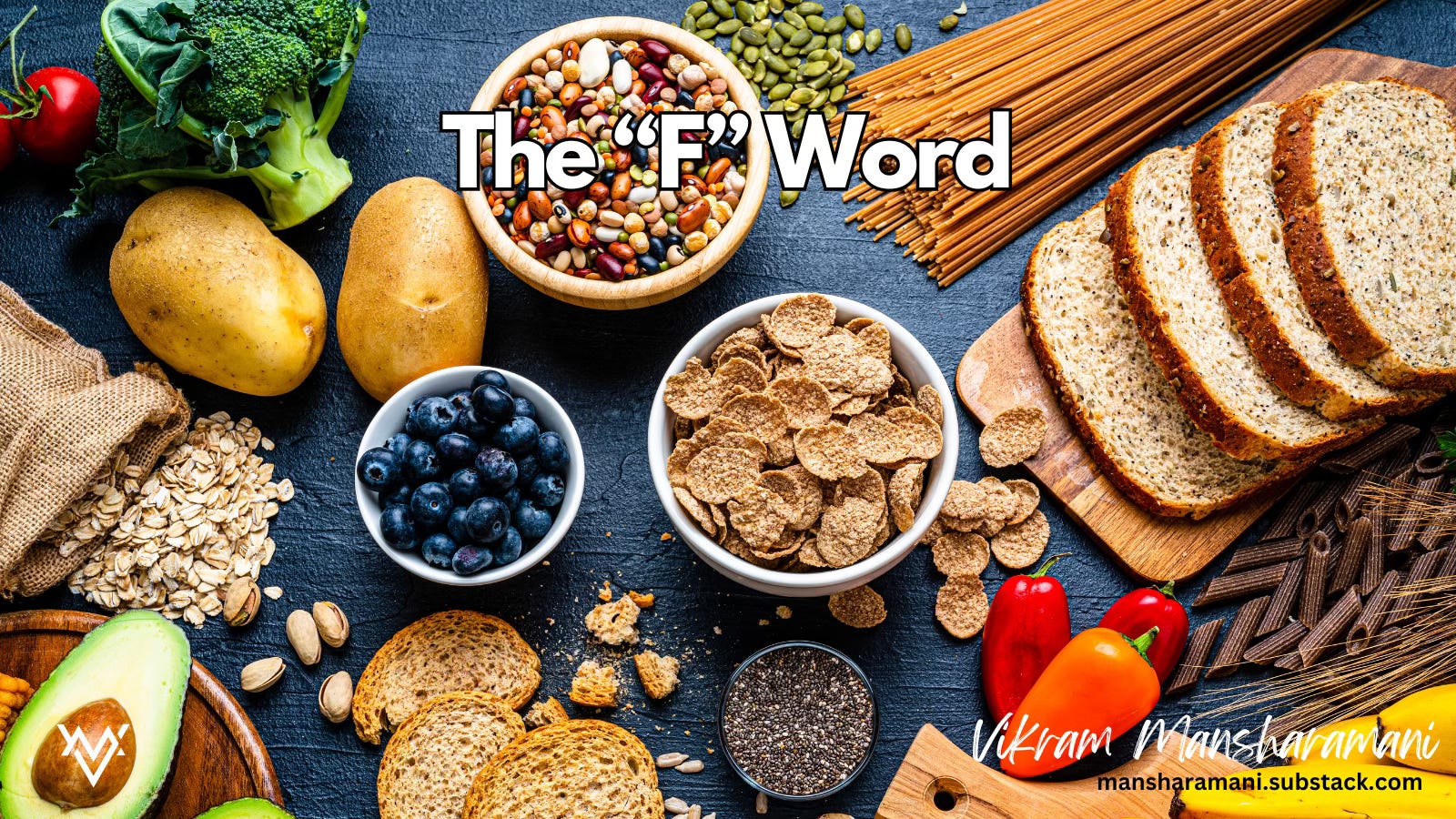
The protein boom is alive and well. Unless you live under a rock, you’ve likely seen protein being marketed on almost every food item you buy. Doritos, your coffee, and even your ice cream now trumpet their protein content. And it’s not just a marketing story; consumers are demanding more protein. A majority of Americans say they’re actively trying to eat more of it. Meat snacks alone have become a $5.5 billion juggernaut, and #protein has millions of posts on Instagram, TikTok and YouTube. These days, the word “protein” on a package is almost as important as the price.
Food fads are not new, and while I believe the protein story isn’t a fleeting phenomenon, it’s not unreasonable to question the sustainability of the boom. After all, before protein, American consumers were infatuated with hydration. Remember when Liquid I.V. suddenly appeared everywhere? When everyone started carrying water bottles and Stanley cups became a status symbol?
It seems to me there’s a pattern here. First, a real health concept goes mainstream, social media amplifies interest in the topic, the food industry builds an empire with brands and products to help consumers achieve their goals, our culture changes to incorporate the new desires, and suddenly it’s in every aisle of your grocery store.
For the past eighteen months, I’ve had a front row seat as food trends play out in real time. Regular readers will know that I currently run a private-label frozen pizza company that produces single-serve offerings for some of the largest grocers in America.
As the protein wave rapidly accelerated and gained momentum (even before Starbucks and Dunkin’ had amplified the interest) in early 2025, I directed my product development team to focus their efforts on a high-protein pizza. Early last fall, our taste tests indicated we had a winner, and the market agreed. One of America’s largest grocery retailers agreed to put it on its shelves in 2026.
I say this not to sell you pizza but to explain why I spend an unusual amount of time studying food trends, how consumer focus interfaces with market opportunities, and, perhaps most importantly, what might be coming next. And in that regard, I’ve been directing our innovation efforts at Goodwell Foods towards what I believe may be an even bigger trend than protein.
And those running the biggest food companies in the world seem to agree with me as they too are saying the F-word.
Fiber.
Bigger than protein? Yes. How’s that? Turns out that most Americans already get enough protein. Johns Hopkins puts it simply: “Americans get plenty of protein, but not enough fiber.” The numbers aren’t even close. According to the American Society of Nutrition, around 7% of American adults consume the recommended daily fiber. Over 90% of women and 97% of men fall short of the recommended 25 to 35 grams per day.
The opportunity is enormous. The average American gets about 15 grams of fiber a day, about half of what they need. That’s like eating a single apple and not consuming any additional fiber all day. Most foods (pasta, a sandwich, a bag of chips, a protein bar) don’t even move the needle. Those foods that do (beans, lentils, vegetables, whole grains) have been scraped off American plates by low-carb dieting efforts and our (relatively) newfound protein obsession. We spent years telling people to avoid carbs. Fiber was the baby thrown out with the bathwater.
Nearly everyone in America is skipping the indigestible carbohydrate that fights heart disease, diabetes, and cancer, while also providing necessary fuel for our gut microbiome, which is connected to everything from our immune system to our moods. Fiber, it turns out, may be the biggest nutritional deficiency we’ve discovered yet and has the potential to mitigate numerous chronic diseases.
But could this be a fleeting trend that never makes it into the mainstream? To validate my thinking, I often turn to the people whose bonuses depend on figuring out these trends. On a recent earnings call, for instance, PepsiCo CEO Ramon Laguarta boldly noted that “fiber will be the next protein.” And McDonald’s CEO Chris Kempczinski publicly predicted that fiber “is going to be big.” When the leaders ofPepsiCo and McDonald’s both say the same thing, I pay attention.
And the signals are now rapidly emerging. PepsiCo is launching Smartfood Fiber Pop and SunChips Fiber. Whole Foods put fiber-forward products in its 2026 trend forecast. Thrive Market reported a 30% surge in fiber-related search terms. And Datassential, the food research firm that tracks what’s actually moving in the industry, called fiber “the next big health trend following on the heels of protein.”
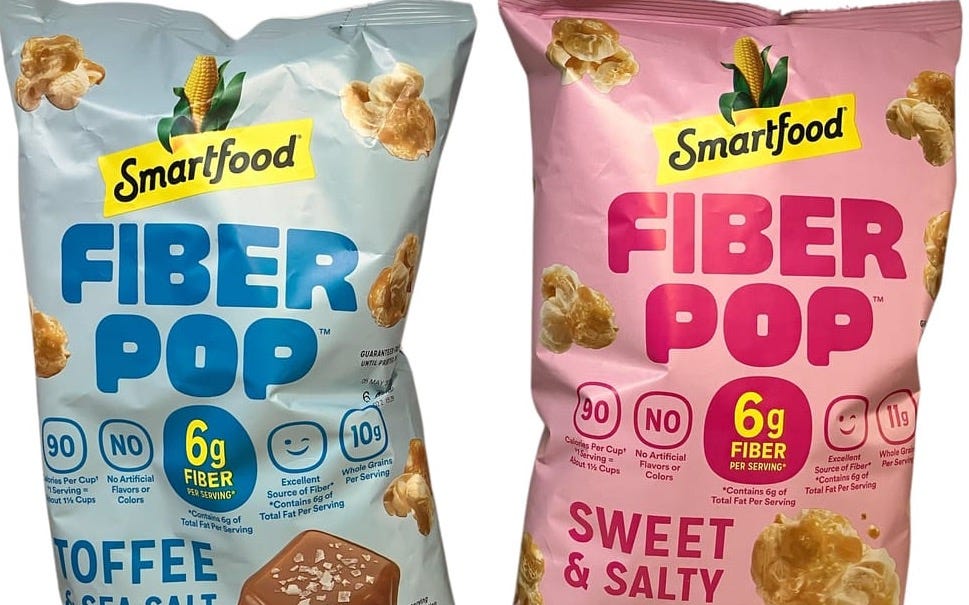
The validation from food industry titans tells me that fiber isn’t just a fun speculation. The breadth of interest suggests there’s an entire supply chain gearing up to feed a forthcoming surge in American appetites for fiber.
GLP-1 drugs are further accelerating this trend. About one in five American adults have used (or are using) Ozempic, Wegovy, or a similar medication. GLP-1 users experience a 25 to 40 percent decrease in caloric intake, which means every bite has to count. Nutrient density per calorie increasingly matters. Given its ability to deliver satiety, blood sugar stability, and gut health, fiber demand is likely to rise rapidly alongside GLP usage. When the drugs that are reshaping how America eats also happen to increase the need for fiber, you have a trend with structural tailwinds, not just a viral TikTok moment.
Speaking of TikTok, social media has jumped aboard with “Fibermaxxing,” the act of maximizing daily fiber intake through every meal and snack. Fibermaxxing started online, moved into mainstream food culture, and is now in the boardrooms of America’s largest food companies. A majority of consumers said they’d try “fibermaxxing” after learning about it.
Every few years, the food industry finds a health trend to rally around. Hydration had its moment. Protein is today’s focus. And, I really believe that fiber is next. When 93% of the country isn’t getting enough of something that prevents heart disease, diabetes, and cancer, that’s not a trend. That’s an opportunity. And a big market.
The CEOs of the largest companies in the world are placing their bets. Product launches are already in motion. Social media is abuzz with discussion. And back in our test kitchen at Goodwell Foods, our product development team is working on developing a high-fiber pizza that will be ready to go later this year.
Soon, everyone will be saying the F word.

VIKRAM MANSHARAMANI is an entrepreneur, consultant, scholar, neighbor, husband, father, volunteer, and professional generalist who thinks in multiple-dimensions and looks beyond the short-term. Self-taught to think around corners and connect original dots, he spends his time speaking with global leaders in business, government, academia, and journalism. He’s currently the Chairman and CEO of Goodwell Foods, a manufacturer of private label frozen pizza. LinkedIn has twice listed him as its #1 Top Voice in Money & Finance, and Worthprofiled him as one of the 100 Most Powerful People in Global Finance. Vikram earned a PhD From MIT, has taught at Yale and Harvard, and is the author of three books, The Making of a Generalist: An Independent Thinker Finds Unconventional Success in an Uncertain World, Think for Yourself: Restoring Common Sense in an Age of Experts and Artificial Intelligence and Boombustology: Spotting Financial Bubbles Before They Burst. Vikram lives in Lincoln, New Hampshire with his wife and two children, where they can usually be found hiking or skiing.