
Artificial Intelligence Gets an "F"
Several 2026 commencement speeches exposed what the next generation really thinks about the future.

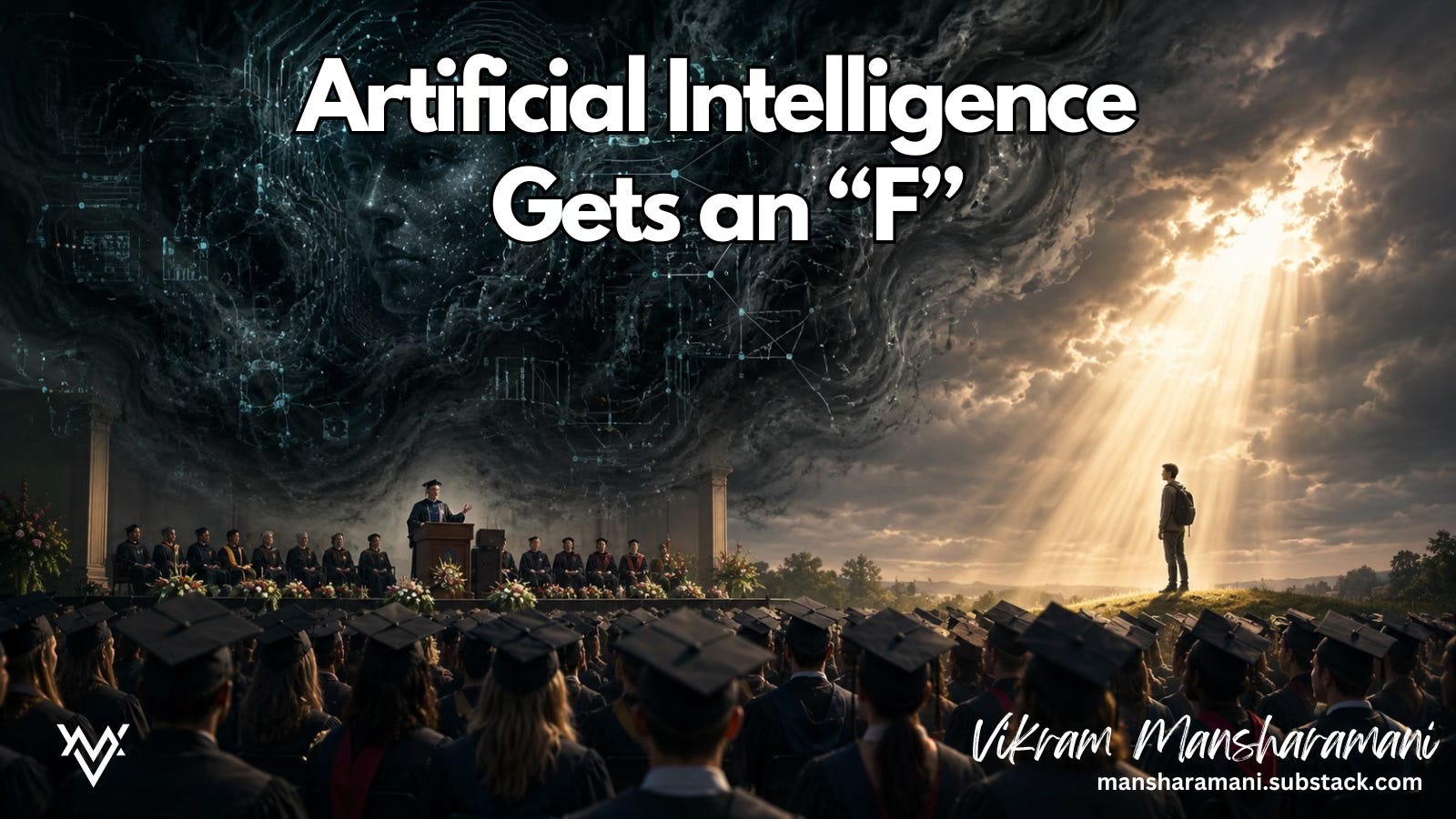
It’s graduation season, and like Spring itself, it’s a time of renewal, hope, and new beginnings. It always brings back the excitement I felt decades ago, in the audience in cap and gown, my whole life ahead of me.
It’s also the season of older people standing at podiums telling younger people what lies ahead and the secret sauce to living their lives. And it’s no easy task for the speaker: 15 minutes to make an impact on a crowd that’s hungover, sunburned, and already thinking about the after-party. They also already feel like they have all the answers – who doesn’t at that age? Stated or not, there seems to be a simple rule for commencement speech success: energize the graduates and make them feel like they can take on the world.
But as I listened to a bunch of this year’s speeches, I was struck by a recurring theme: students pushed back. It started in Orlando. On May 8, real estate executive Gloria Caulfield stood before the graduating class of UCF’s College of Arts and Humanities and called artificial intelligence “the next industrial revolution.” The students booed. Not a polite murmur. A sustained roar that continued to get louder until Caulfield stopped, turned to the administrators, and asked, “What happened?”
She tried to recover: “Only a few years ago, AI was not a factor in our lives” and the crowd cheered… but as she continued, “and now, AI capabilities are in the palm of our hands…” the boos resumed. One graduate, Ethan Lubin, told the New York Times: “Talking about artificial intelligence at a college for arts and humanities can be, you know, a bit rough, because it kind of goes against the humanities part.”
The next day, it happened again. At Middle Tennessee State University, Scott Borchetta, the Big Machine Records CEO best known as Taylor Swift’s adversary, told graduates that “AI is rewriting production as we sit here.” More boos.
His response: “Deal with it,” followed by: “Then do something about it. It’s a tool. Make it work for you.” Then he told them what they’d learned in college was “already obsolete.” A man worth $450 million telling students with six-figure debt that their education is worthless. Gizmodo’s verdict: “Perhaps not well-suited to the job of inspiring young people.”
A week later, former Google CEO Eric Schmidt got the same treatment at the University of Arizona. As soon as he mentioned AI, the crowd reacted. Schmidt, to his credit, stopped and said: “I can hear you. There is a fear in your generation that the future has already been written, that the machines are coming, that the jobs are evaporating, that the climate is breaking, that politics are fractured, and that you are inheriting a mess that you did not create.” It might have been the most honest thing said by anyone this commencement season. It was also an admission, from a man worth $30 billion, that those who built these technologies understand the fear they’ve created among the next generation.
TechCrunch’s headline summarized the lesson to be drawn from these speeches: “If you’re giving a commencement speech in 2026, maybe don’t mention AI.”
The reaction of graduates shouldn’t be surprising. The pushback against artificial intelligence is a reflection of society’s worries. A Pew Research survey found half of Americans are more concerned than excited about AI. And a Gallup report says the mood is getting worse, not better. Hope is giving way to anxiety and, in some extreme cases, anger.
Think about this from the graduates’ perspective. They were told to go to college. They did. They were told to learn skills the economy values. They did. Many of them took on mountains of debt to do so. And now they’re listening to people who are making gazillions from this revolution tell them the very skills they just spent four years acquiring are being automated…and it’ll make the future better. The boos are not just anti-technology. They’re also anti-hypocrisy.
AI's Brave New World

Last week I wrote about why AI keeps me up at night. This week, I want to explain why it also gets me out of bed in the morning. I’ve always felt that successfully navigating uncertainty requires consideration of multiple perspectives and since last week was about worries, it’s now time to explore the upside of AI.
I’ve written a lot about AI over the past year, focusing on both risks and opportunities emerging from the technology. But watching students boo speakers created a new perspective on the topic for me. I realized today’s youth aren’t Luddites smashing looms. They are kids who grew up with technology, whose entire lives have been videoed and shared with the world; they use ChatGPT to write papers and Claude to debug code. They’re not afraid of AI because they don’t understand it. They’re afraid because they do.
The people making money from these technological advances tell them that the future is bright and are confused by people who think otherwise. Somebody is wrong, and I’m not sure it’s the kids in the audience.
AI-Generated Unemployment

There has been a lot written lately about AI’s impact on the economy, specifically how many jobs it will eliminate. And that’s really only one of the many risks that will accompany the massive advancements in information processing capabilities that AI is empowering.
Not every commencement speaker this season got booed. Country singer Eric Church gave what’s being called “one of the best commencement speeches ever” at the University of North Carolina. He didn’t mention AI once. Instead, he strummed his guitar and used its six strings as metaphors for faith, family, partnership, ambition, community, and individuality. He closed by telling graduates: “The world does not need another cover song. It needs an original.” Then he played “Carolina” and rows of students in blue caps swayed arm in arm. Millions viewed online.
His speech worked because he talked to the graduates, not at them. In this swirling world of change and chaos he told them to ground themselves in old-fashioned values that are just as relevant now as they were for our grandparents.
In a time when students are wondering if being human is enough, Church offered them something deeply human. And at least for now, it sure seems like humans value humans.
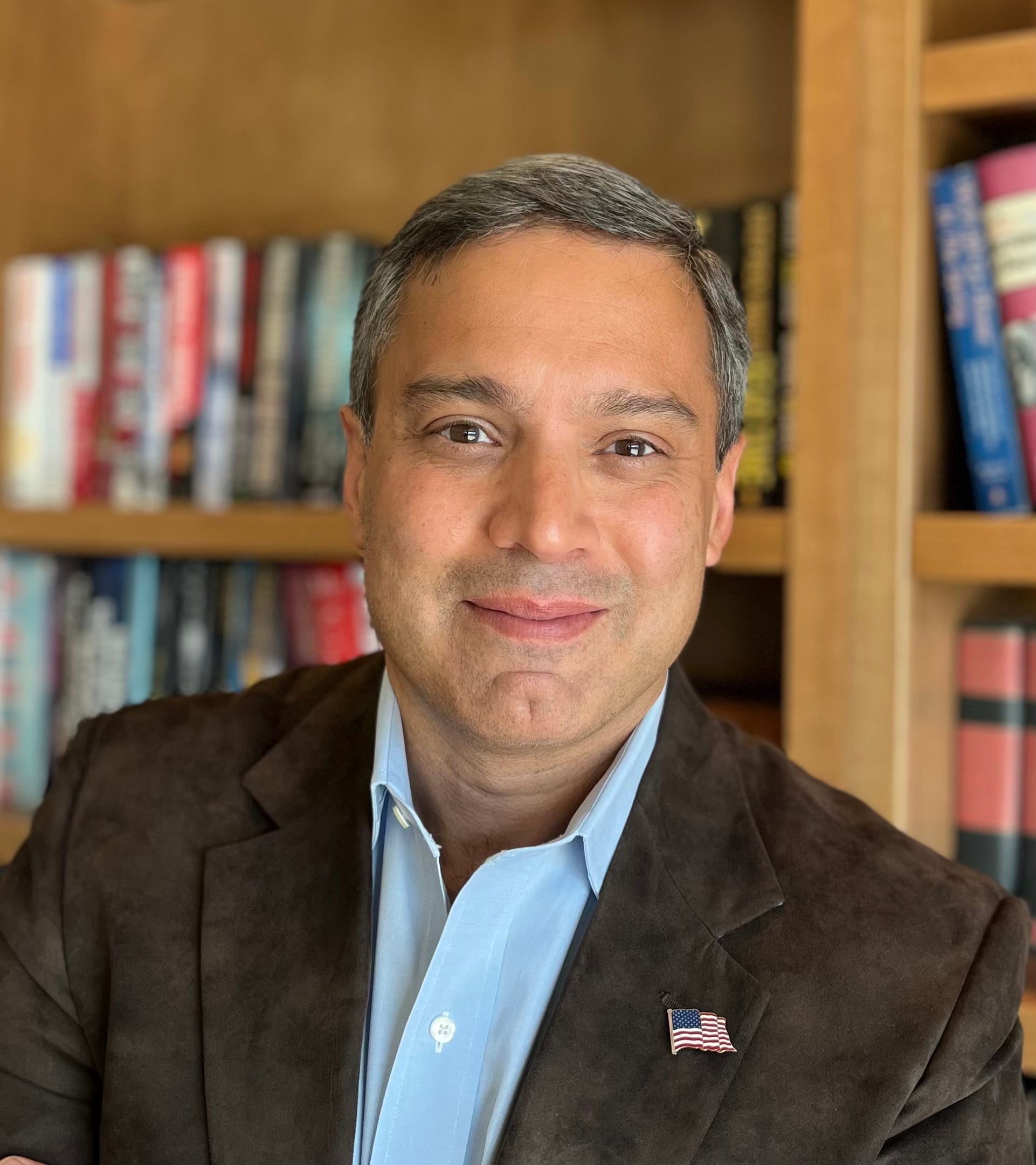
VIKRAM MANSHARAMANI is an entrepreneur, consultant, scholar, neighbor, husband, father, volunteer, and professional generalist who thinks in multiple-dimensions and looks beyond the short-term. Self-taught to think around corners and connect original dots, he spends his time speaking with global leaders in business, government, academia, and journalism. He’s currently the Chairman and CEO of Goodwell Foods, a manufacturer of private label frozen pizza. LinkedIn has twice listed him as its #1 Top Voice in Money & Finance, and Worthprofiled him as one of the 100 Most Powerful People in Global Finance. Vikram earned a PhD From MIT, has taught at Yale and Harvard, and is the author of three books, The Making of a Generalist: An Independent Thinker Finds Unconventional Success in an Uncertain World, Think for Yourself: Restoring Common Sense in an Age of Experts and Artificial Intelligence and Boombustology: Spotting Financial Bubbles Before They Burst. Vikram lives in Lincoln, New Hampshire with his wife and two children, where they can usually be found hiking or skiing.